East and Southeast Asia | Philippines | Manila


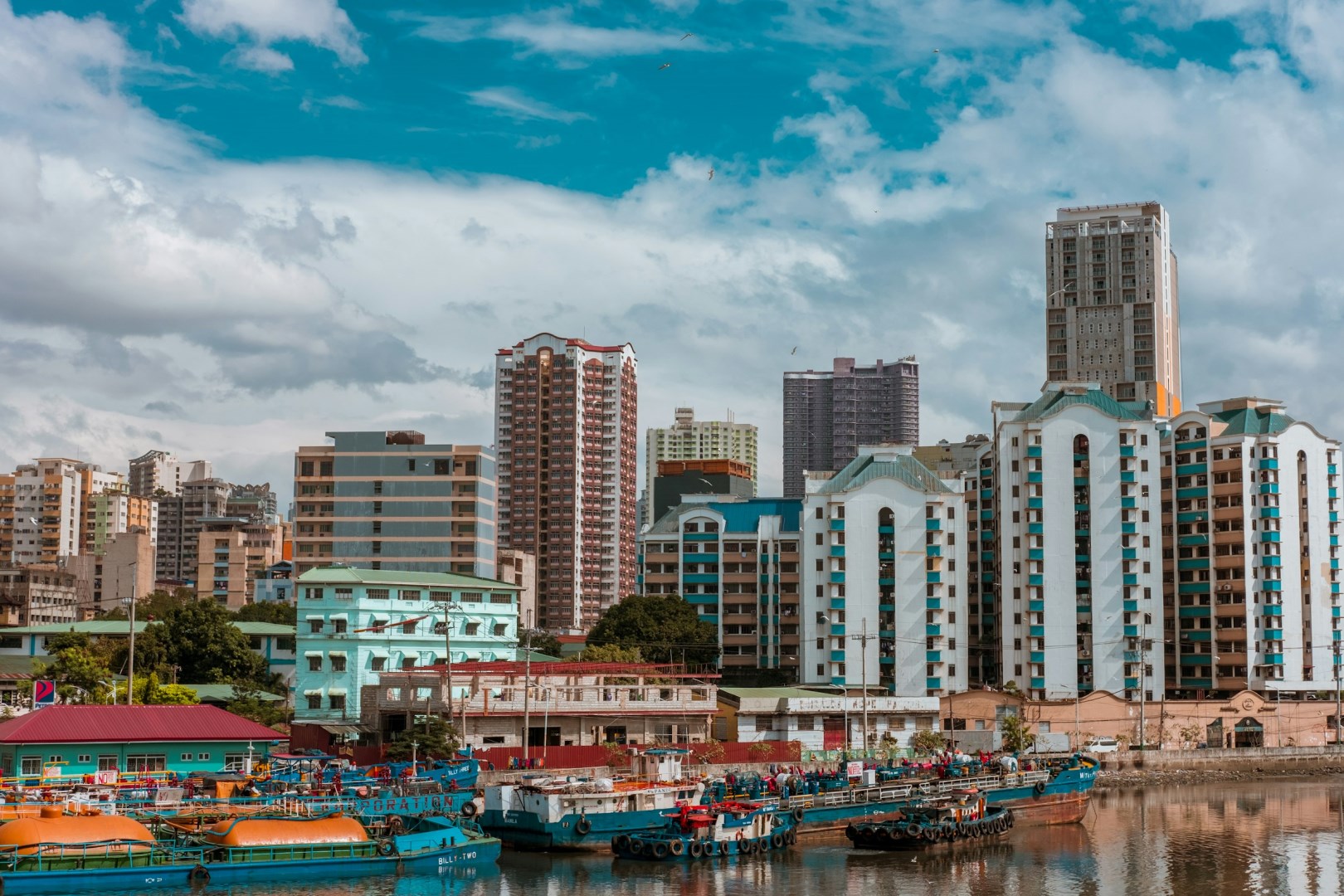


Manila is the capital of the Philippines and a densely built city on the eastern shore of Manila Bay. It serves as a major center for government, commerce, education, and the arts, while its neighborhoods reveal different layers of Filipino life. The Pasig River connects the city to the wider metropolitan area, and the waterfront remains an important part of its setting. Manila is especially known for Intramuros, the walled historic district at the heart of the city, where churches, plazas, museums, and restored colonial buildings provide a strong contrast with the surrounding modern urban landscape.
Manila’s identity has been shaped by Indigenous communities, Spanish colonial rule, Chinese-Filipino trade, American influence, and the country’s independence movement. Intramuros preserves many of the city’s most important historic sites, including Fort Santiago, San Agustin Church, and Casa Manila. Fort Santiago is closely associated with national hero José Rizal, whose former prison cell is preserved in the Museo ni Rizal. Nearby Binondo, widely recognized as one of the world’s oldest Chinatowns, reflects the long history of Chinese-Filipino commerce and community life. Religious festivals, neighborhood traditions, and Filipino family customs remain central to the city’s culture.
Several landmarks provide different perspectives on Manila’s landscape and history. Rizal Park, also called Luneta, forms a large open space beside the historic center and contains the Rizal Monument, museums, gardens, and the National Museum Complex. Intramuros offers walking routes through old gates, defensive walls, plazas, and historic churches, while Fort Santiago occupies a strategic position near the Pasig River. The National Museum of Fine Arts, National Museum of Anthropology, and National Museum of Natural History present collections covering Philippine art, culture, archaeology, and natural science. Manila Bay also provides a notable waterfront setting, particularly around the baywalk.
Manila’s food reflects the Philippines’ long history of trade and cultural exchange. Filipino staples such as adobo, sinigang, pancit, lumpia, and lechon are widely available, while Binondo is known for Chinese-Filipino dishes such as mami, siopao, dumplings, and hopia. Street food and neighborhood eateries provide another view of everyday dining, with snacks such as fish balls, kwek-kwek, and banana cue commonly found around the city. Manila is also home to many regional Filipino cuisines, so dishes from Luzon, the Visayas, and Mindanao can be found alongside international food. The result is a city where food often reflects migration, family traditions, and local adaptation.
Other Popular Destinations in Philippines